
The INTRECOM study
In the INTRECOM study (starting in 2026), we aim to explore a new way of communication based on brain signals. We want to find out whether participants can control a speech computer using brain signals that are produced when they try to make different hand movements or try to say certain words.
To do this, we use the INTRECOM system. This system measures brain signals using small electrode grids that are placed on the brain. These grids are connected to a transmitter under the skin, which sends the signals wirelessly to a computer outside the body.
In the INTRECOM project, researchers hope to determine how fast and how well people with severe paralysis can communicate using brain signals. We will also study whether these brain signals change over time.
During the
INTRECOM project we collaborate with the
Technical University in Graz, Austria,
ABILITY Neurotech in Geneva, Switzerland and with
CorTec Neuro in Freiburg im Breisgau, Germany.
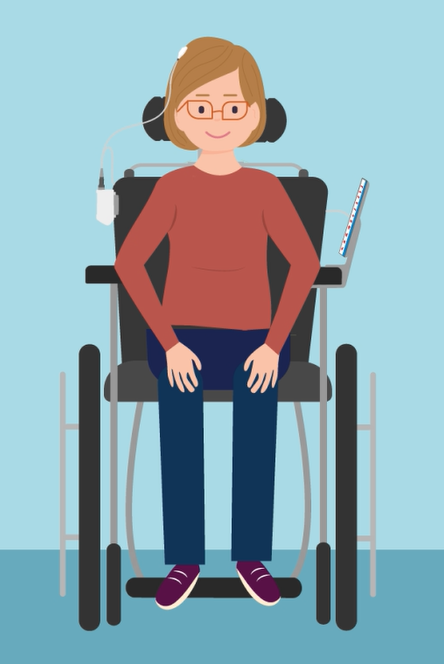
A participant in the INTRECOM study has implanted meauring-electrodes on the brain that measure brain signals. These electrodes are connected to a subcutaneous transmitter, which wirelessly sends the signals to a computer outside the body. The screen the participant is looking at displays the communication program.
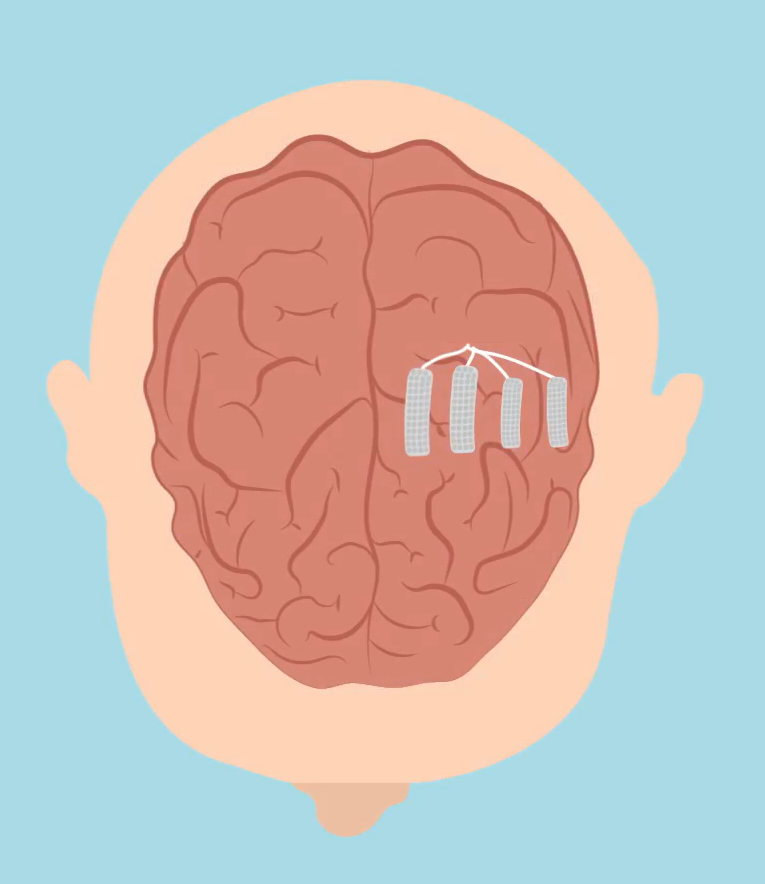
The measuring-electrodes are placed on the brain, specifically on the part that controls movement.
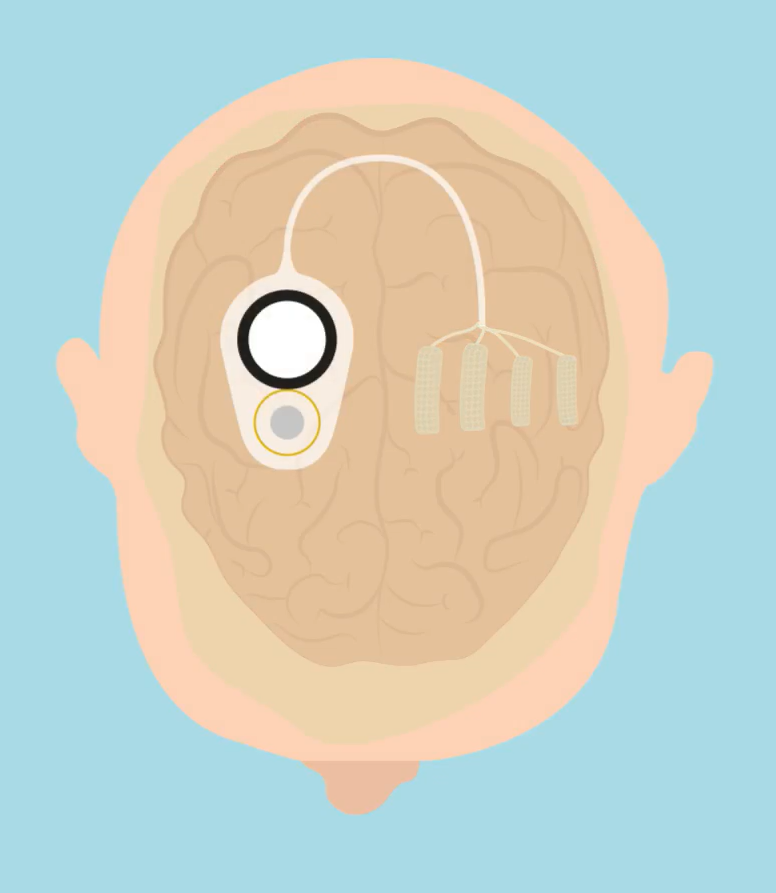
The measuring-electrodes are connected to a subcutaneous transmitter that is placed on the skull and under the skin.
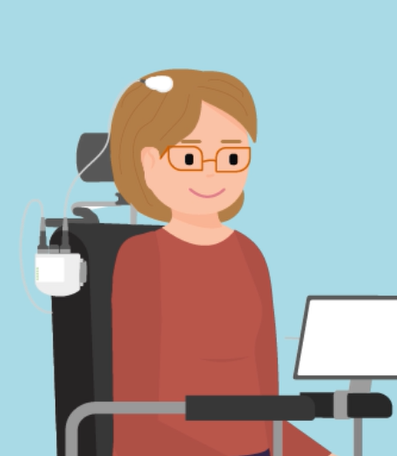
The measuring-electrodes are magnetically connected to a headpiece that can be placed on the head.
Would you like to learn more about the INTRECOM study?
Watch the two videos below for an explanation of the study and the steps involved in participating in the INTRECOM study.
You can also read more about participating in the research on the Participating in Research page.